 Best Online Therapy
This article covers Anna Keyter’s online practice.
Hello, and welcome to my online practice page. In this article, I will tell you a bit about my practice, provide some examples of cases I have worked with and talk you through my training and practice. I specialise in supporting couples facing challenges and providing compassionate therapy for individuals. I accept that clients are the experts in their lives. I deliver my work with authentic warmth and respect. I am a BPS-registered psychologist and psychotherapist, and I combine evidence-based approaches to suit the individual or couple where they are. I always work from a place of curious enquiry to understand your situation. Feel free to read my bio here.
Working with couples
Most couples come to therapy when communication is broken down, arguments seem endless, emotional intimacy has disappeared or following major betrayals such as infidelity. I try to create a safe, neutral and non-judgmental space so both partners can be heard and respected. I don’t take sides.
Anna Keyter’s Online Practice: Integrative Psychotherapy For Couples:
- I often use the Gottman Method – Building Love Maps, increasing fondness and admiration, turning toward each other, managing conflict well, and repairing after arguments.
- Relational Life Therapy (Terry Real) – Joining Through the Truth, Inner Child Healing, Re-Parenting, practical skill building.
- Internal Family Systems (IFS) – Help each person to understand their different “parts” (protective, wounded, critical, etc).
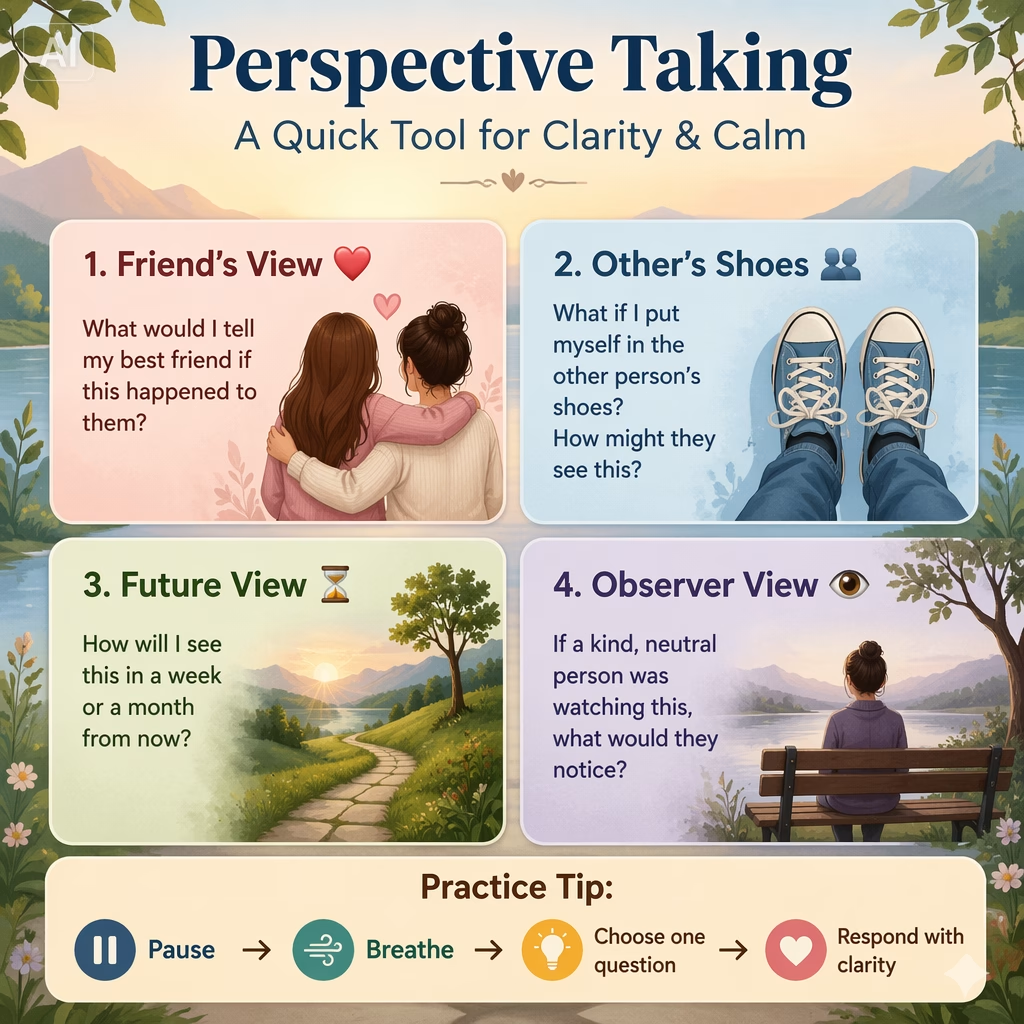
- DBT and CBT tools – DEAR MAN for assertive communication, emotional regulation for anger, perspective-taking and healthy timeouts (and more).
I do inner child work, too, because the patterns that keep repeating in relationships are often from childhood experiences.
I often ask couples a question:
“Are you speaking to your best friend the way you’re speaking to your partner right now?
This simple question can often be a powerful moment of awareness. Many people realise that they are much kinder and more patient with friends than with the person they proclaim to love most. This realisation is often a turning point.
Important note: Couples therapy is most effective when both partners are willing to learn, grow and take responsibility. If one person is only there to get the other “fixed”, then progress is limited. Real healing comes from mutual effort and a desire to rebuild the relationship.
I offer 50-minute or 80-minute couples sessions, depending on the depth of work that is needed.
Anna Keyter’s Online Practice: Welcome Video
Real Life Examples – Couples Therapy
These examples are not isolated incidents but reflect a common pattern seen across many couples I’ve worked with. Accordingly, each case study is a composite created from several real couples with very similar experiences.
- One couple was exhausted from constant high-conflict arguments. The man had difficulty with anger outbursts, and the woman felt criticised and unsafe all the time (as if she were walking on eggshells). They became adept at de-escalating, identifying each other’s triggers, and communicating without attacking through Gottman conflict management, DBT emotional regulation skills, IFS parts work, and perspective-taking exercises. They said they fought a lot less after 14 sessions and gradually rebuilt trust and affection.
- Another couple needed help working through infidelity. The pain, the rage, and the sadness were so deep. The unfaithful partner took full responsibility, working through Relational Life Therapy, Gottman trust-building techniques and inner child work (particularly around abandonment wounds), while the hurt partner worked through profound pain. They worked through 12 committed sessions and rebuilt trust, creating new, healthier relationship agreements. Later, they said they felt stronger together than before the crisis.
- A couple was on the brink of a breakup over housework, made more complicated by ADHD. Constant criticism eroded their connection. We employed practical ADHD-friendly tactics (breaking tasks into small steps, using timers, body doubling), Gottman appreciation exercises, and fair compromise. The resentment fell away, and they were working as a team, not against each other.
- A long-term married couple who felt like roommates with little affection or intimacy. Using Gottman Love Maps, fondness and admiration exercises and Relational Life Therapy, they reconnected emotionally and physically. By session 11, they were dating each other on purpose again and said they fell back in love.
- Not all couples remain together after couples therapy. Some couples come to the realisation that they are at the end of their journey together and decide to end the relationship. In couples therapy, the couple will decide how to end the relationship amicably.
Example of a perspective-taking handout:
Working with Individuals
I also provide individual therapy (generally 50-minute sessions) with a wide range of challenges. I work from a variety of therapeutic approaches to best meet the needs of each client. Common frameworks include Cognitive Behavioural Therapy (CBT), Cognitive Processing Therapy (CPT), Acceptance and Commitment Therapy (ACT), trauma-informed work and Internal Family Systems (IFS). You can find a full list of therapies we offer here, or view a list of our services here.
Shame and Guilt
So many clients come in weighed down with shame and guilt. Guilt is “I did something bad” (other-focused). Shame is “I am a bad person” (me-focused). I support clients in separating the two, reducing toxic self-blame, and developing self-compassion. For trauma survivors and those who grew up in critical environments, this work is particularly powerful.
Fear, worry, and anxiety
Many people live in constant fear and worry. We use the CBT triangle of thoughts-feelings-behaviours to work through anxious thoughts, dial down catastrophic thinking and build practical coping skills. Clients are taught to experience their emotions without being controlled by them.
Stress and Burnout
Chronic stress and burnout are extremely prevalent, especially in high-achieving people. Individuals show up often worn out, emotionally spent, and barely hanging on. We work on regulating the nervous system, boundary-setting, perfectionism and rebuilding energy and motivation. Burnout recovery requires practical changes and deeper healing of beliefs that drive over-functioning.
Perimenopause & Menopause
Women going through perimenopause and menopause have many physical symptoms, but also intense emotional swings, anxiety, low mood, irritability and identity challenges. Hormonal fluctuations amplify past trauma, loss, or issues of self-esteem. I provide compassionate support for women to navigate this transition, lessen shame around symptoms and come out empowered in this new stage of life.
Anna Keyter’s Online Practice: Therapy Examples
These examples are not isolated one-offs — they reflect recurring patterns I’ve seen in many individuals. Accordingly, each case study is a composite based on several real individuals with very similar experiences.
- A woman who had been raped came into therapy with unbearable shame and self-blame. She was out of touch with her own body and had difficulty being intimate. We worked through the trauma safely and gently using Cognitive Processing Therapy (CPT). After 10-12 sessions, she was able to stop blaming herself, clearly put the responsibility on the perpetrator, and gradually feel safer and more at peace in her body.
- One of my male clients had long-term depression and anxiety and felt trapped in negative thought loops and hopeless. Through CBT (working deeply with the thoughts-feelings-behaviours) and Acceptance and Commitment Therapy (ACT), he learned to challenge harsh self-criticism and take small, meaningful steps. His spirits lifted, and he felt agency and hope returning.
- One woman in perimenopause felt extreme anxiety, mood swings and grief over ageing. She felt she was losing herself. We worked through these changes using a mix of CBT, ACT and inner child work. She learned to be kind to herself through hormonal shifts and found strength and purpose in this new chapter of her life.
- A man who suffered childhood trauma had trouble with trust, people pleasing, and explosive anger. Through IFS, trauma-informed therapy, and inner child healing, he found ways to soothe his younger wounded parts and establish healthier boundaries. He said he finally felt lighter and more genuine in his relationships.
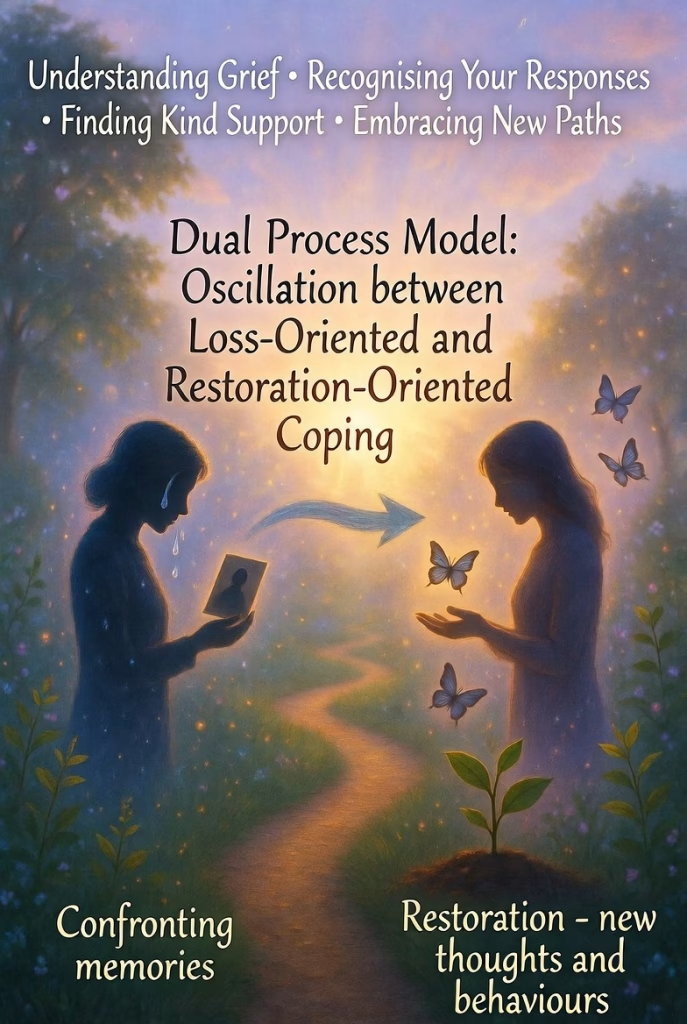
- Several clients came in mourning the loss of significant relationships. By working through the stages of grief, Denial (shock and disbelief), Anger (frustration and unfairness), Bargaining (seeking control and “what if” scenarios), Depression (intense sadness), and Acceptance (learning to adapt and move forward), they came to an acceptance. They honoured their loss, worked through complex emotions, and slowly rebuilt identity and hope for the future through 5-10 sessions of gentle grief work.
An example of a grief handout.
Understanding Grief
These examples are just a small part of what I do. Everyone’s story is different, and I tailor my approach to each person.
A Message to Prospective Clients:
Therapy is not a magic pill. It is a courageous journey of learning more about yourself, healing old wounds, learning new skills, and creating the life and relationships you truly want. Whether you are a couple feeling stuck or in pain, or an individual carrying shame, fear, burnout, grief, or the challenges of menopause, you can work together to make the changes.
I provide a warm, compassionate, and professional space where you will feel seen and supported. If you feel ready to take the next step, I would be honoured to work with you.
Ready to take the next step?
I’d love to support you on your journey. Choose the option that works best for you:
📅 15-Minute Free Consultation 🕒 50-Minute Session 🕒 80-Minute Session
I’m here if you need to talk.
Keeping My Practice Safe
- I do 30 hours CPD (Continuing Professional Development) every year, minimum, to keep up and improve my clinical skills.
- I also have formal clinical supervision with a registered clinical psychologist every 3 weeks. Clinical supervision is a formal, confidential supervisory relationship where the supervisor provides guidance, oversight, case review, risk management and support for ethical decision-making and reflective practice.
- I also take part in peer supervision on a 3-week cycle, a collaborative, non-hierarchical forum with colleagues to discuss cases, give mutual feedback, problem-solve and share learning.
- I meet with like-minded professionals monthly for networking, provide clinical supervision to others and engage in regular formal training to ensure that my practice is safe, current and evidence-informed.
- I do not disclose any client-identifiable information in any supervision or meetings – client confidentiality is strictly maintained, and all information is stored and handled securely. You are welcome to read my full terms and conditions for more information on confidentiality and data protection.
Anna Keyter’s Online Practice References:
Gottman, J. M., & Gottman, J. S. (2015). Gottman couple therapy. In A. S. Gurman et al. (Eds.), Clinical handbook of couple therapy.
Schwartz, R. C., & Sweezy, M. (2019). Internal family systems therapy (2nd ed.). Guilford Press.
Real, T. (various works on Relational Life Therapy).
Do you want to learn more about Anna Keyter’s Online Practice? Complete the form below.
Error: Contact form not found.
Related Posts

Online Counselling UK: Professional Online Counselling from Registered Psychologists in the UK
Feeling overwhelmed or seeking support? Online Counselling UK at Best Online...
Portuguese-Speaking Online Therapist UK: Culturally Sensitive Therapy
Portuguese-Speaking Online Therapist – Apoio na Tua Língua, com Sensibilidade...