
An article by Anna Keyter (Online Psychotherapist)
Hey there, you. Yes, you who are struggling with that familiar inner voice that brings doubts and fears into your mind. Life can feel like a tug-of-war sometimes, can’t it? A tug of war against stress, anxiety, or maybe just the weight of expectations. What if I told you there’s a way to stop the tug of war and move forward? That’s where Acceptance and Commitment Therapy (ACT)—particularly online ACT therapy—comes in. All you need to do is let go of the rope. And I’m here to walk you through how to do it. In this article, we will be discussing Online Acceptance and Commitment Therapy.
What’s ACT All About?
Picture this: instead of trying to silence that nagging voice in your head or wrestle every negative emotion to the ground, you learn to let those thoughts and feelings exist, without letting them control you. That’s the heart of Acceptance and Commitment Therapy. As an online ACT therapist, I guide you to live a meaningful life, even when things get messy, using mindfulness-based strategies that focus on acceptance and committed action. Understandably, acceptance and letting go are more difficult when grief is involved. ACT can be helpful when working through really difficult emotions.
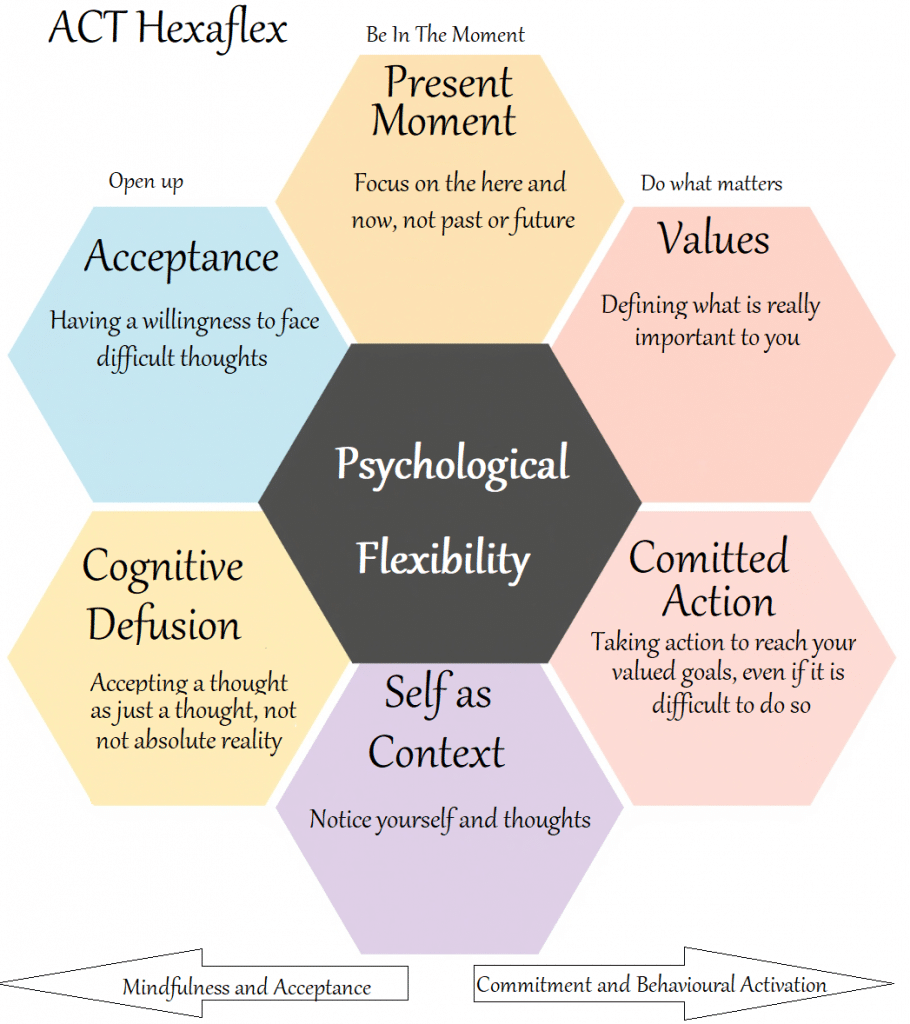
Our psychologists are trained in ACT. Online Acceptance and Commitment Therapy is built on six core principles, but here’s the essence: accept what you cannot control and take actions aligned with who you truly are. It’s not about pretending everything’s fine or chasing endless positivity. It’s about showing up for your life, fully, even when it’s hard. Learn more about psychologists and psychotherapists and what the difference is.
Why This Matters to You
Let’s get real. Have you ever felt stuck, like you’re in an abyss of overthinking or self-doubt? Maybe you’ve tried pushing those feelings away, only to find they come back stronger. Or perhaps you’ve avoided things, such as relationships, goals, opportunities, because the fear of failing or feeling uncomfortable was just too much. I get it. We’ve all been there.
Online ACT therapy invites you to try something different. Instead of battling your thoughts or waiting for the “perfect” moment, you learn to make space for discomfort and take steps toward what matters most. It’s like saying, “Okay, anxiety, you can tag along, but I’m still going to that job interview.” Or, “Yeah, I feel sad today, but I’m still showing up for my friends.”
How Does It Work?
Imagine your mind as a busy room full of chatter—thoughts like “I’m not good enough,” “What if I fail?” or “Why can’t I just be happy?” Online Acceptance and Commitment Therapy doesn’t try to kick those thoughts out. Instead, it teaches you to notice them, like clouds passing by, without getting pulled in by them. Here’s how:
Open Up
Acceptance: Stop fighting your feelings. Let them be. It’s okay to feel anxious, sad, or angry. These emotions don’t define you—they’re just part of the human experience.
Cognitive Defusion: Learn to step back from thoughts. Instead of buying into a thought such as “I’m a failure.” Instead, notice “I’m having the thought that I’m a failure.” This understanding that it is a thought and not a true reality is a small shift that can make a big difference. It helps you move away from believing the thought to recognising it simply as a thought.
Be in the Moment
Being Present: Focus on the present moment. Life happens in the here and now, not in worries about the future or regrets about the past. You can use grounding exercises, like paying attention to your senses, to stay connected to the present. For example, while walking your dog, instead of overthinking, notice your environment: What do you see, hear, smell, and feel? This simple practice can help anchor you in the moment.
Self as Context: Remember, you are not your thoughts. You are the awareness—the mindful presence—that observes your thoughts and feelings as they happen. This perspective helps reduce over-identification with your struggles. In essence, it means you can notice your thoughts and emotions without judgment, recognising them as passing experiences rather than defining who you are.
Do What Matters
Values: Clarify what truly matters to you—connection, growth, adventure, creativity. Your values serve as your compass.
Committed Action: Take small steps towards living by your values—even if you feel scared. Courage grows through action.
Why You’ll Love It
To me, ACT is a great psychotherapy. The beauty of online Acceptance and Commitment Therapy is its practicality. It’s not about long meditation sessions or pretending life is perfect. It’s about giving you tools to handle life’s difficulties so you can build a rich, meaningful existence. Whether you’re facing anxiety, depression, stress, or feelings of being lost, online ACT therapy meets you where you are.
Let me share a quick story. Someone I knew—let’s call her Suzi—was overwhelmed by self-doubt about her career. Through online Acceptance and Commitment Therapy, she noticed those doubts without letting them stop her. She took small steps—updating her CV, reaching out to mentors—while carrying her fears along. Today, she’s thriving in a role she once thought was out of reach. That could be you.
How to Start with Online ACT Therapy
You don’t need a therapist to start, although working with an online ACT therapist can be highly beneficial. Next time you notice yourself caught in a cycle of negative thoughts, pause. Take a deep breath and ask yourself: “What’s one small, meaningful action I can take right now that aligns with who I want to be?” It might be texting a friend, going for a walk, or tackling a task you’ve been avoiding. Do it, even if your mind is telling you not to.
Your Next Step
Remember, you don’t need to have everything figured out right now. You don’t need to feel “ready.” Online Acceptance and Commitment Therapy encourages you to start where you are, with what you have, and move toward a life that truly lights you up. What’s one thing you value deeply—whether it’s connection, growth, or creativity? What’s one tiny step you could take today—perhaps just acknowledging your feelings or setting a small goal—despite the discomfort? If ACT is not for you, feel free to look at our other services here.
Reference: If you want to deepen your understanding, check out books like The Happiness Trap by Russ Harris or ACT Made Simple.
You’ve got this. And online ACT therapy is here to support you along the way. Are you ready to give it a try?
Related Posts

Online Person-Centred Therapy: A Humanistic Revolution In Psychology
Dear Reader, if you’re seeking a space to be truly heard, Online Person-Centred...

Introduction to Online Motivational Interviewing
Discover online motivational interviewing at Best Online Therapy UK, a...